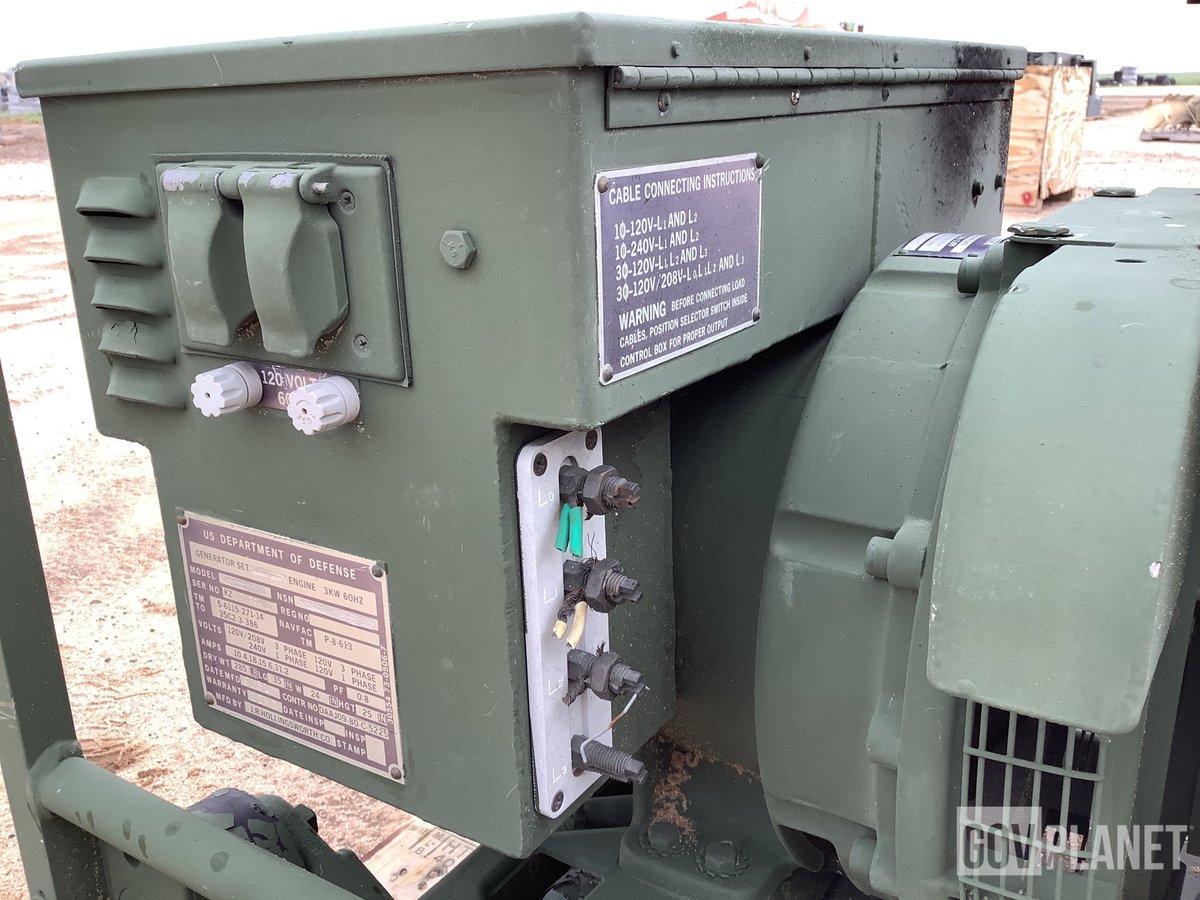
Choosing the right generator isn't just about plugging in; it's about securing reliable power when you need it most. When facing the critical decision of a Military Surplus vs. Commercial Generators Comparison, you're weighing two fundamentally different philosophies of engineering, value, and intended use. One is built for the battlefield, the other for the broader civilian world. Understanding their nuances can save you money, headaches, and potentially keep your lights on when disaster strikes.
Whether you're prepping for power outages, outfitting an off-grid cabin, or seeking robust industrial power, this guide will cut through the noise, offering clear, actionable insights to help you decide which powerhouse truly offers better value for your needs.
At a Glance: Key Takeaways
- Military Surplus Generators:
- Built Tough: Designed to MIL-SPEC standards for extreme durability and reliability in harsh conditions.
- Cost-Effective: Often 30-70% cheaper than new commercial units of comparable power.
- Long Lifespan: Engineered for thousands of continuous operating hours, lasting decades with proper maintenance.
- Versatile Fuel: Many models can run on alternative fuels like biodiesel or kerosene.
- Maintenance: May require more hands-on maintenance due to age or previous use; parts can sometimes be specialized.
- Logistics: Often heavy and bulky, requiring specific transport and installation.
- Commercial Generators:
- New & Warrantied: Come with manufacturer warranties and the latest technology.
- Variety: Wide range of sizes, fuel types (gas, propane, natural gas), and noise levels.
- Accessibility: Easily purchased new from dealers, with widespread service networks.
- Cost: Generally higher initial purchase price for robust units, but lower for lighter-duty models.
- Durability: Varies significantly by brand and price point; not typically built to military-grade standards.
- Convenience: Many offer quieter operation and residential-friendly features.
The Core Question: Value Beyond the Price Tag
When we talk about value in generators, we're not just looking at the sticker price. We're assessing longevity, reliability, maintenance costs, fuel efficiency, and performance under pressure. Military surplus generators, by their very nature, present a unique proposition. They were engineered with an uncompromising mission: to provide power, no matter the conditions, for critical operations. Commercial generators, while diverse, cater to a broader market with varying demands, from occasional home backup to continuous industrial applications. The "better value" isn't a universal truth; it's deeply personal and dependent on your specific requirements.
Military Surplus Generators: Unpacking the Armored Beast
Imagine a piece of equipment designed to power a forward operating base in the desert, a command center in the arctic, or critical communication systems during a natural disaster. That's the pedigree of a military surplus generator. These aren't just "tougher" versions of civilian models; they are purpose-built machines, engineered to MIL-SPEC (Military Specification) standards for extreme durability, reliability, and performance in the most demanding environments. Once they've served their country, they enter the civilian market, offering unparalleled capabilities at a fraction of their original cost.
Advantages that Matter
The benefits of opting for a military surplus generator are compelling, particularly for those who prioritize ruggedness and long-term performance.
- Cost-Effectiveness: This is often the primary draw. You can acquire a heavy-duty, commercial-grade generator, often with thousands of dollars of features, for significantly less than a comparable new commercial unit. We're talking 30-70% savings, allowing you to invest in a much higher quality machine than your budget might otherwise permit.
- Built to Last: High Performance & Longevity: Military generators are not disposable. They're designed for continuous duty and heavy loads, often rated for 10,000+ operating hours, potentially lasting decades with proper maintenance. Their construction uses military-grade materials like reinforced steel and corrosion-resistant coatings, making them inherently more resilient than most civilian models. This means less worry about wear and tear, even under strenuous use.
- Extreme Versatility: From scorching desert heat to sub-zero temperatures, these units are designed to operate reliably across diverse climates and terrains. Many models also offer both single-phase and three-phase power outputs, making them suitable for a wide range of applications, from powering a small home to running heavy industrial equipment.
- Fuel Savvy & Adaptable: Modern military diesel engines are optimized for efficiency. With features like turbocharging and intercooling, they can often achieve 5-10% better fuel efficiency than commercial equivalents. Furthermore, many military units are designed to be "multi-fuel capable" or at least compatible with alternative fuels like biodiesel or kerosene, offering crucial flexibility in fuel sourcing, especially in emergency situations. This commitment to sustainability also reduces their environmental footprint over their long operational lives.
- Unexpected Tech: You might assume surplus means outdated, but many military generators incorporate advanced features. Look for automatic voltage regulation (AVR) for stable power output, digital control panels for easy monitoring, and even remote monitoring capabilities. Some modern units can even integrate with hybrid systems, combining with solar panels or wind turbines for a continuous and sustainable power supply.
The Practical Realities: Downsides to Consider
While the advantages are significant, military surplus generators aren't without their quirks and challenges.
- Size & Weight: These are heavy-duty machines. Many models can be quite large and cumbersome, complicating transport and installation. You'll likely need specialized equipment for moving and positioning, which adds to the initial setup cost.
- Maintenance Needs: An older, heavily-used unit might require more frequent maintenance or initial repairs to bring it up to peak condition. While parts are generally available for common military engines (Caterpillar, Cummins, Detroit Diesel), some specialized components might require specific sourcing or expertise. A proactive maintenance schedule, however, can largely mitigate these concerns.
- Fuel Consumption: Diesel generators, in general, can consume more fuel than alternatives like natural gas or solar, especially under heavy loads. While military models are efficient for their class, it's a factor to consider for long-term operational costs compared to, say, a natural gas grid-tied system.
- Noise Levels: Built for function over aesthetics, many military generators can be louder than their residential-grade commercial counterparts. Noise levels vary significantly by size and design, and while some newer units come with sound-attenuated enclosures, older models might require additional soundproofing solutions if noise is a critical concern.
Where They Shine: Real-World Applications
The robust design and versatile capabilities of military surplus generators make them ideal for a host of demanding scenarios.
- Emergency Backup: They are unparalleled for homes, small businesses, and critical facilities during extended power outages or natural disasters. Their reliability is a huge asset when the grid goes down.
- Industrial & Construction: Powering heavy machinery, tools, and temporary facilities on demanding job sites is precisely what these units were built for. Their resilience to dust, dirt, and continuous operation is invaluable.
- Off-Grid & Remote Operations: For cabins, research stations, or mining operations in isolated locations where grid power is nonexistent, a military surplus generator provides a robust, self-contained energy solution.
- Outdoor Events: Festivals, concerts, and large gatherings often require substantial, reliable power for lighting, sound systems, and vendor equipment. These generators can handle the load without breaking a sweat.
- Disaster Recovery: When infrastructure is compromised, military surplus generators are often deployed to power emergency shelters, medical facilities, and communication systems, serving as the backbone of recovery efforts.
- Agriculture: Ensuring a steady power supply for farm equipment, irrigation systems, and climate-controlled livestock facilities is crucial, and military generators deliver consistent performance.
- Hybrid Systems: Many users are integrating these powerful units with solar panels or wind turbines, using the military generator as a reliable backup or primary power source for continuous and sustainable energy.
Commercial Generators: The Civilian Standard
Commercial generators represent a vast category, spanning everything from small portable units for camping to massive industrial standby systems. They are designed with diverse civilian needs in mind, prioritizing factors like ease of use, quiet operation, specific fuel types, and compliance with residential or commercial codes. While they might lack the "overbuilt" nature of military models, they offer distinct advantages in other areas.
Advantages of Going Commercial
For many applications, a commercial generator is the more straightforward and practical choice.
- Accessibility & Newness: New commercial generators are readily available from a wide network of dealers, distributors, and online retailers. You get a brand-new unit, often with the latest efficiency and control technologies, backed by a manufacturer's warranty. This provides peace of mind regarding immediate functionality and future support.
- Tailored Options: The commercial market offers an immense variety. You can easily find units precisely tailored to your power needs, fuel preference (natural gas, propane, gasoline, diesel), noise restrictions, and budget. Need a super-quiet residential unit? Or a specific emissions-compliant model? The commercial market has it.
- Modern Features & Integration: Many commercial generators boast user-friendly digital controls, smartphone integration for remote monitoring, automatic transfer switches for seamless power restoration, and advanced noise attenuation. They are often designed with residential or typical commercial environments in mind, meaning they can be quieter and aesthetically more suitable.
- Easier Parts & Service: With widespread dealer networks and a large installed base, parts and certified service technicians for popular commercial brands are generally easier to find and access. This can simplify long-term maintenance and troubleshooting, especially if you're not mechanically inclined.
Potential Drawbacks of Commercial Units
While versatile, commercial generators also have their limitations, particularly when compared to their military counterparts.
- Initial Cost: For a comparable power output and robust build quality, new commercial generators will almost always have a significantly higher upfront cost than a well-maintained military surplus unit. The military's volume purchasing and design-for-endurance drive down their "used" market price.
- Durability & Build Quality: The term "commercial" encompasses a huge spectrum. While high-end commercial generators are very durable, many standard units are not built to the same MIL-SPEC standards as military models. They might use lighter-gauge steel, less robust components, and are not typically designed for continuous, extreme-condition operation.
- Longevity: Many commercial generators, especially those targeted at residential or light commercial use, are not designed for continuous duty or thousands upon thousands of operating hours. Their engines and components may have shorter design lifespans compared to military-grade powerplants.
- Environmental Constraints: While robust enough for most civilian applications, many commercial units aren't specifically engineered to withstand the extreme temperature swings, dust, sand, or humidity that military generators are designed to conquer. This doesn't mean they can't handle tough weather, but they might not be as resilient in truly brutal conditions.
The Head-to-Head Showdown: Specs and Scenarios
Let's break down the key comparison points to help clarify where each type of generator truly excels.
| Feature / Category | Military Surplus Generator | Commercial Generator |
|---|---|---|
| Durability & Build | MIL-SPEC, heavy-duty, reinforced steel, corrosion-resistant. Built for extreme conditions. | Varies by price/brand, generally good, but rarely MIL-SPEC level. Residential units are lighter. |
| Longevity | Designed for 10,000+ operating hours, decades with maintenance. Continuous duty. | Varies widely. High-end industrial units are long-lasting; residential units have shorter lifespans. |
| Initial Cost | Significantly lower (30-70% of new comparable units). | Higher, especially for robust or high-power units. |
| Fuel Efficiency | Optimized diesel engines, often 5-10% more efficient than commercial equivalents. Multi-fuel compatible (diesel, biodiesel, kerosene). | Varies. Diesel is efficient, but gas/propane/natural gas options are common. Typically single-fuel. |
| Fuel Type Options | Primarily diesel (often multi-fuel capable). | Wide range: Gasoline, Propane, Natural Gas, Diesel. |
| Maintenance | Often requires hands-on knowledge, parts for older units can be specialized but available. | Easier access to parts and certified technicians for common brands. |
| Noise Levels | Can be louder; designed for function over quiet operation. Sound attenuation exists for newer models. | Often quieter, especially residential standby units. Noise is a key design consideration. |
| Size & Portability | Often large and heavy, built for rugged transport rather than easy movement. | Wide range from very portable to large standby units. Less focus on extreme ruggedness. |
| Advanced Features | AVR, digital controls, remote monitoring (on many models), sometimes hybrid integration. | AVR, smart controls, remote monitoring, auto-transfer switches, smart home integration. |
| Warranty & Support | Typically none (as-is surplus). Rely on dealer or third-party support. | New units come with manufacturer warranties and extensive dealer support. |
Durability & Build Quality
Here, military surplus units are the undisputed champions. Their MIL-SPEC foundation means they're not just rugged; they're engineered to withstand ballistic shock, extreme vibrations, electromagnetic interference, and operate flawlessly in environmental extremes. Commercial units, even high-end industrial ones, are designed for the rigors of commercial environments, which, while tough, rarely compare to the demands of military deployment.
Performance & Longevity
If you need a generator that can run for days, weeks, or even months on end, powering heavy loads without complaint, the military surplus generator shines. Their engines are built for continuous duty cycles, a characteristic often found only in the most expensive commercial industrial generators. Most commercial residential or even mid-range commercial units are designed for intermittent backup use, not perpetual power generation.
Cost vs. Value
The sticker price for a used military surplus generator is almost always lower than a new commercial unit of similar power and quality. But value goes beyond that. The military unit offers an incredible return on investment in terms of raw durability and expected lifespan. However, you might pay more in transportation, installation, or initial refurbishment costs. Commercial units offer predictable upfront pricing, but you pay a premium for newness, warranty, and ease of acquisition.
Maintenance & Parts
This is where the playing field levels somewhat. Military generators use common industrial diesel engines (Cummins, Caterpillar, Detroit Diesel, John Deere, etc.), so engine parts are generally available. However, specific military-unique components or control panels might require sourcing from specialized dealers. Commercial generators, especially popular brands, boast widespread parts availability and service networks, making routine maintenance and unexpected repairs often simpler and quicker. Regular maintenance is paramount for both, as detailed in our military surplus generator guide.
Noise & Portability
If quiet operation is a top priority, many commercial generators, especially modern residential standby models, offer significantly better noise attenuation. Military generators, while some newer models have sound-dampening enclosures, are generally louder. Portability is also a win for commercial units, with many small to medium-sized generators designed for easy movement. Military units are often large, heavy, and built to be moved by specific heavy equipment, not by hand.
Fuel & Efficiency
Diesel is the primary fuel for military surplus generators, and their engines are highly efficient for their class, with multi-fuel capabilities in some units providing excellent versatility. Commercial generators offer a broader choice of fuels (gasoline, propane, natural gas, diesel), allowing you to select based on local availability, cost, or personal preference. Natural gas or propane units can be convenient if you have a utility line, avoiding fuel storage issues.
Making Your Choice: A Decision Framework
Deciding between military surplus and commercial generators boils down to matching their strengths with your priorities.
When Military Surplus Makes Sense
- You're on a tight budget but demand uncompromising reliability and power. You want maximum bang for your buck on raw power and durability.
- Your primary concern is long-term operational resilience. You need a generator that can run for extended periods in challenging conditions without failing.
- You operate in extreme environments. Think remote construction sites, harsh off-grid locations, or areas prone to severe weather.
- You're comfortable with (or can hire) a mechanic. You understand that a used military unit might require some initial tender loving care or ongoing, proactive maintenance.
- You value fuel flexibility. The ability to run on various diesel-based fuels is appealing.
- You don't mind a bit of noise or the logistics of moving a heavy machine. Function outweighs form and portability.
When Commercial is the Clear Winner
- You prioritize a brand-new unit with a full warranty and immediate support. You want the peace of mind that comes with a new purchase.
- Noise levels are a critical factor. Your neighbors (or your ears) will thank you for a quieter residential or sound-attenuated commercial model.
- You need a specific fuel type like natural gas or propane for convenience, utility hookup, or ease of storage.
- Your power needs are more intermittent or lighter duty. A residential standby or portable unit suffices for occasional outages or small projects.
- You prefer easier access to parts and service technicians. A widespread dealer network is important to you.
- Ease of installation and operation is a priority. You want a straightforward, often 'plug-and-play' experience.
Buying Military Surplus: Navigating the Market
If you're leaning towards the robust power of a military surplus generator, careful procurement is essential. You're buying a used, specialized piece of equipment, so diligence is key.
Where to Find Them (and What to Avoid)
Genuine military surplus generators are often found through specific channels.
- Government Auctions: Websites like GovPlanet are prime sources, directly selling surplus military equipment. These often have detailed descriptions and photos.
- Specialized Dealers: Companies like Wiba Generators specialize in refurbishing and selling military surplus units. They often offer tested units, sometimes with limited warranties, and can provide valuable expertise.
- Online Marketplaces: eBay and Craigslist can yield finds, but exercise extreme caution. Verification and inspection are paramount.
- Military Equipment Shows or Forums: These niche communities can provide leads and expert advice.
- Beware of "Military-Style": A common pitfall is mistaking a civilian generator painted olive drab for a genuine military unit. Always verify the manufacturer, model, and MIL-SPEC compliance. If it doesn't have a clear military designation (like MEP-series for US military generators), be skeptical.
Your Due Diligence Checklist
Buying a surplus generator is not like buying a toaster. Here’s what you need to scrutinize:
- Condition, Condition, Condition: Thoroughly check for signs of wear, tear, leaks (oil, fuel, coolant), damage, and corrosion. Pay close attention to fuel lines, the engine block, and the exterior casing.
- Operating Hours: This is crucial. Prioritize units with under 3,000 operating hours. While military engines are built for 10,000+, lower hours indicate more remaining life.
- Performance Test: If possible, insist on seeing the generator start and run. Does it start smoothly? Does it maintain stable voltage under various loads? Test the voltage regulator functionality.
- Documentation: Request any available maintenance records, technical manuals (TMs), and load testing documentation. These prove a history of care and verify performance.
- Reputable Brands: Look for well-known industrial engine manufacturers that supply the military: Caterpillar, Cummins, Onan, Kohler, Fermont, or Detroit Diesel. These brands indicate quality and better parts availability.
- Specifications: Verify the power output (wattage, voltage, KVA rating) and frequency. Most U.S. military generators are 60 Hz, but some are 50 Hz. Ensure compatibility with your equipment before purchasing.
- Systems Check: Examine all wiring for corrosion or damage. Confirm the functionality of the control panel, gauges, and the fuel and cooling systems. Check the battery's condition.
- Key Questions: Ask about previous use, maintenance history, any known issues or repairs, and if the seller offers any warranty or return policy.
- Logistics: Don't forget about the practicalities. Plan for transportation costs and handling equipment due to the potential weight and bulk. Factor in professional installation to ensure safe and efficient operation.
Keeping Your Powerhouse Running: Maintenance Essentials
Regardless of whether you choose military surplus or a commercial unit, a comprehensive maintenance schedule is crucial for maximizing reliability and lifespan. Treat your generator like the critical asset it is.
- Regular Oil Changes: For most diesel generators, plan for oil changes every 100-200 operating hours, or annually if usage is low. Use the manufacturer's recommended oil type.
- Air Filter Inspections/Replacements: Inspect monthly, or more frequently in dusty environments. Replace as needed, typically every 250-500 operating hours. A clogged air filter chokes the engine and reduces efficiency.
- Fuel Filter Replacements: These should be replaced every 250-500 operating hours to prevent contaminants from reaching the engine. Ensure you use clean, high-quality fuel.
- Battery Care: Keep the battery charged and terminals clean. Test its voltage regularly, especially if the generator isn't used frequently.
- Cooling System Check: Monitor coolant levels and inspect hoses for leaks or cracks. Ensure the radiator is free of debris.
- General Cleanliness: Keep the generator clean and free of dust, dirt, and debris. This prevents overheating and extends component life.
- Routine Engine Inspections: Periodically check belts, hoses, and wiring for wear and tear. Listen for unusual noises during operation.
- Proper Storage: Store your generator in a dry, covered area, protected from the elements. Follow manufacturer recommendations for long-term storage, which may include fuel stabilizers or draining fuel tanks.
Your Next Steps: Powering Forward with Confidence
The choice between a military surplus and a commercial generator isn't about one being inherently "better" than the other. It's about aligning the generator's strengths with your specific needs, budget, and willingness to manage its unique characteristics.
If you value unparalleled durability, extreme performance, and a lower upfront cost for serious power—and you're prepared for the potential logistical and maintenance realities—a military surplus generator could be the most valuable investment you make. If, however, you prioritize brand-new equipment, a warranty, quiet operation, or specific fuel types and widespread service, a commercial unit might offer more convenient value.
Start by clearly defining your power requirements, assessing your operating environment, and honestly evaluating your comfort level with maintenance. With this guide, you now have the tools to make an informed decision and ensure you're equipped with reliable power, whatever challenges come your way.